Get Your Book Into the News
—With or Without a Publicist
by Marcia Yudkin
Whether your book comes into the world care of a big-name publisher, a small press or your own kitchen-table business, you face the problem of letting your audience know it exists. Advertising costs huge amounts of money, and if review copies yield a spare harvest, what then? With a little imagination, some planning and a lot of energy, anyone can earn the kind of publicity that keeps loved, needed books in print for years.
|
If your publisher belongs to the large, New York variety, keep in mind that its staff publicists are probably massively overworked, geared to traditional publicity methods and less informed than you are about your subject and audience. So it's important to set up a cooperative relationship that enables you to contribute ideas and implementation, with their support.
Most of the following twelve ideas apply equally to situations where you coordinate with the publisher's publicist and where it's up to you alone to keep your book in front of potential buyers.
1. Work publicity opportunities into the book itself. Carol R. Goldberg and Dawn-Marie Driscoll, authors of Members of the Club: The Coming of Age of Executive Women, conducted a study of women executives' visibility that won coverage in The New York Times apart from the review page, in the form of a piece in the "News of the Week in Review" section.
|
|
Published! How to
Reach Writing Success
|
|
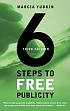
With my book, 6 Steps to Free Publicity,
I pre-planned for attention-grabbing book blurbs by choosing people I wanted to write endorsements and quoting them in the book -- a tactic that may not be suitable for everyone. Armed with the knowledge that newsworthiness sometimes depends on being different, you might decide to set your mystery someplace unusual or give the hero an occupation that seems unprecedented in fiction so far.
2. Include your full address, your hometown or your e-mail address in the book. While it is true that people who discover the book on their own and want to interview you can always try to trace you through your publisher, they may not try, knowing that such efforts often prove frustrating. E-mail in particular costs so little time, money and effort that it encourages the kinds of correspondence and opportunities you want.
My book Freelance Writing for Magazines
and Newspapers, published in 1988 before the ascendancy of e-mail, remained in print
for decades partly because my bio said I lived in Boston and a school that wanted to buy thousands of copies per year found my phone number through directory assistance. Later, after putting my post office box address into
6 Steps to Free Publicity, I was able to show my publisher three exuberant fan letters within the first month, reinforcing their own enthusiasm for continuing to put the word out.
3. Ask your publisher to finance or share the cost of publicity aids. I'm particularly fond of color postcards that reproduce the cover of a book. Request these well before the book goes to print. One publisher paid for them entirely, while another agreed to split the cost with me. I use them for both personal and business correspondence
- as does my mother. Each postcard sent probably gets seen by at least two or three potential book buyers besides the recipient.
4. Take charge of local publicity. By studying the papers on local newsstands and those listed in your Yellow Pages under "newspapers" you'll come up with media outlets probably not on most publicists' lists. With the 1991 release of
Smart Speaking, I sent a "local author releases new book" kind of press release that included the words "South End" and "Newton" to my neighborhood paper and the papers serving my co-author's hometown. The
South End News ran a front-page feature story with two photos of me and The Newton Graphic ran a shorter story about my co-author, Laurie Schloff.
With 6 Steps to Free Publicity, when my publisher's press releases didn't arouse the interest of
the Boston Globe, I took a close look at its Sunday "South Weekly" section and discovered that I knew the woman who did the arts/human interest profiles. I sent her a note and within a week had a date set for an interview and photo shoot.
5. Give your publisher the necessary information to get word out about the book properly. You'll probably receive a daunting author's questionnaire to fill out. Since I found some of the standard questions dumb (how is it relevant what my spouse does?) and insufficient space for all the names and addresses I wanted to give them, I just put all my publicity leads into a long memo. Include at least the following: editors of any publications you've ever written for; experts, opinion leaders and columnists in your subject area; smaller magazines and newsletters that you think might run a review; producers of any radio or TV shows you've ever appeared on; your favorite bookstores; and any ideas for publicity angles.
Even better, write personal notes for your publicist to send out with the review copies or do it all yourself. Michael Burlingame, a history professor at Connecticut College, sent a copy of his biography of Abraham Lincoln to a reporter in Springfield, Illinois who had been helpful to him. The reporter wrote a story about the book that went out on the AP newswire and ended up in dozens of newspapers across the country, and even in David Letterman's nightly monologue.
6. No book tour? Set up your own speaking engagements. Since the publication of
Freelance Writing, I have taught how-to-get-published workshops regularly at adult education centers throughout New England. Each workshop meets just one evening for three hours, but it ensures that my name and book title land in front of more than 100,000 catalog browsers four to six times a year.
For you, the appropriate speaking venues might be public libraries, save-the-whales chapters, "Inc. 500" companies or hang-gliding clubs. If you set up an author's account with your publisher, you should be able to get half-price copies of your book to sell on your own at your appearances.
|
Improve Your Odds for Media Coverage
Discover how to generate dozens of ideas that reporters, broadcasters - and your prospective customers - love. Inject dynamism, relevance
and surprise into your media pitches.
Learn how to distill your message so it captures attention right away, then bolster your credibility and eliminate factors that turn off editors and producers.
Publicity success course. |

Publicity success
course |
|
7. Write opinion pieces, letters to the editor and articles. The more closely related these are to your book, the greater their power to persuade readers to look for it in the bookstore. Do your best to get the periodical to run a "bio note" that includes the title of your book.
8. Don't be shy - tell everyone you meet about your book. John Kremer tells the story of an author who went on an airplane and instead of hiding behind a newspaper or between her earphones, talked to her seatmate about the book she had published. Her neighbor turned out to be Abigail Van Buren. When a "Dear Abby" column mentioned the traveler's book, that casual conversation paid her back with several mail sacks full of orders.
9. Spread the word online as well. Chances are, you already have e-mail. Find out what e-mail discussion lists, Web-based forums and newsgroups cover your topic, and participate in discussions related to your work. Sign your posts with your name and the tag line, "Author of ____" and people will soon be asking you to say more about your book and where they can buy it.
Post an author's note at amazon.com and other online bookstores.
Create your own web site too.
 |
Improve Your
Proofreading
Quick online course teaches how to
catch pesky typos. Whether you check
writing on screen or on paper, learn the
stakes for error-ridden copy, the five
best proofreading methods and the tools
you can or shouldn't use to identify
errors. Includes practice tests and
answers.
Proofreading Hacks course. |
10. Come up with topical angles for press releases. After notifying the media about the release of your book, you should look for newsworthy angles that can keep your name in print and on the air. Some headlines to illustrate possibilities for both fiction and nonfiction authors:
-
ESTABLISHED NOVELIST STAYS IN ANYTOWN
-
CHILDREN CAN HANDLE LITERARY VIOLENCE, CLAIMS CHILDREN'S BOOK AUTHOR
-
LOOKING FOR LOVE? TIPS FROM RHODA WRITER
-
WHY CONGRESS CAN'T CHANGE -- A MANAGEMENT AUTHOR'S ANALYSIS
-
HOW A NOTED GUIDEBOOK AUTHOR PACKS FOR HER TRAVELS
Do this three or four times a year to an appropriate press list and you could be on your way to a decent backlist success.
11. Let your publicist know what you're doing and the results. Whether it's a local cable appearance or your long-lost college roommate sending you a clip of an article about you that appeared in Banking News, pass the news on to your editor and/or publicist. Even if your publicity doesn't provoke redoubled efforts on their part to keep the book going, it could translate into a higher advance or a larger initial print run next time around.
12. Invest in your career as an author. Yes, much of the above takes effort and time. But for a long career as an author, you've got to take the extended view. You already put a lot of energy into the work, and with a little more after the fact, you can boost the chances that that previous investment continues to pay you back. I figure that if I can keep all of my books in print, that's my retirement fund.
Copyright 1999, 2019 Marcia Yudkin. All rights reserved.
|